

Manyug Enterprises has established itself as a leading innovator in Water Treatment Solutions. We specialize in delivering a comprehensive range of advanced water filtering systems tailored to meet the needs of Industrial, Commercial, and Residential clients.
Call Us : +91 9923204428

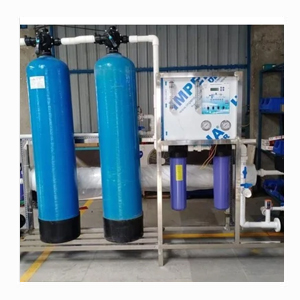


Manyug Enterprises is an Effluent Treatment Plant manufacturers in Pune. We are reliable suppliers, exporters, traders and repairing service providers, serving industrial, commercial, and residential clients across Maharashtra. We design and build Effluent Treatment Plants for a range of industrial applications, including pharmaceutical, textile, chemical, food processing, dairy, and automobile wastewater treatment.
Rather than using one standard treatment configuration for every application, we engineer each ETP around the specific characteristics of the industrial effluent it needs to treat. Many facilities that need an ETP also require a complete Water Treatment Plant for intake side treatment, and we provide complete project support covering design, manufacturing, supply, installation, commissioning, testing, operator training, and operation and maintenance.
As Effluent Treatment Plant manufacturers in Pune, our solutions can include wastewater collection, screening, equalization, pH correction, coagulation, flocculation, clarification, biological treatment, filtration, tertiary treatment, sludge handling, and advanced treatment where required, integrating technologies such as MBBR, SBR, MBR, activated sludge treatment, RO, and ZLD. Every project is backed by the same design to maintenance support: design, manufacturing, supply, installation, commissioning, testing, operator training, and operation and maintenance, so clients have a single point of accountability from the first site visit through years of running operation.
An Effluent Treatment Plant (ETP) is an industrial wastewater treatment system designed to treat effluent generated during manufacturing and industrial processes. The primary purpose of an ETP is to reduce contaminants through a combination of physical, chemical, biological, and tertiary treatment processes, selected according to inlet pollutant load, required treated water quality, reuse needs, and applicable discharge requirements.
Typical treatment flow: Industrial Effluent, Preliminary Treatment, Equalization, Chemical Treatment, Biological Treatment, Clarification, Tertiary Treatment, Treated Water Reuse or Discharge.
An ETP works through multiple treatment stages, and the exact arrangement depends on wastewater characteristics and required treatment quality.
We manufacture the following types of ETP Plant systems, each configured around the wastewater characteristics of a specific industry.
Our ETP solutions serve the following industries, and many of these facilities also require a broader Waste Water Treatment Plant setup alongside their ETP.
We support clients across Bhosari, Chakan, Pimpri Chinchwad, Ranjangaon, Talegaon, Hinjewadi, and Pirangut.
Not every ETP requires all these technologies. The treatment train is selected after evaluating wastewater characteristics and required treated water quality.
A typical ETP may include the following components depending on its configuration.
We manufacture Effluent Treatment Plants in standard capacities of 10, 25, 50, 100, 200, 500, and 1000 KLD, as well as fully Customized ETP Plants built around a facility's exact discharge profile. Selecting the right capacity is not just a matter of picking the nearest standard size, we assess average daily flow, expected peak flow during production surges, the number of operating hours or shifts per day, the pollutant characteristics of the effluent, and any planned expansion in production capacity over the next few years. A plant sized only for today's flow often needs costly retrofitting within a couple of years, so our design team builds in reasonable headroom for growth wherever the client's expansion plans justify it, while keeping the footprint and cost aligned with current requirements.
Below is a detailed technical sheet covering the ETP types, treatment technology, inlet parameters, and key design considerations for our Effluent Treatment Plants in Pune.
| ETP Type | Capacity | Treatment Technology | Inlet Parameters | Treatment Stages | Tertiary Treatment | MOC | Automation | Installation |
|---|---|---|---|---|---|---|---|---|
| Conventional ETP | Customized KLD/MLD | Physico-Chemical + Biological | pH, BOD, COD, TSS, TDS, Oil & Grease | Preliminary + Primary + Secondary | PSF + ACF | MS / FRP / RCC | PLC / Automatic | Civil / Skid Mounted |
| Physico-Chemical ETP | Customized | Neutralization + Coagulation + Flocculation | pH, TSS, COD, Oil & Grease | Screening + Equalization + Chemical Treatment + Clarification | PSF / ACF | MS / FRP / SS | Semi Automatic / PLC | Skid Mounted / Civil |
| MBBR ETP | Customized | MBBR Biological Process | pH, BOD, COD, TSS | Screening + Equalization + MBBR + Clarification | PSF + ACF / UF | MS / FRP / RCC | PLC Based | Civil / Skid Mounted |
| SBR ETP | Customized | Sequencing Batch Reactor | pH, BOD, COD, TSS | Screening + Equalization + Fill + React + Settle + Decant | PSF + ACF / UF | MS / FRP / RCC | PLC Based | Civil / Skid Mounted |
| MBR ETP | Customized | Biological + Membrane Filtration | pH, BOD, COD, TSS, TDS | Pretreatment + Biological Treatment + Membrane Separation | UF / RO | MS / SS / FRP | Fully Automatic / SCADA | Skid Mounted / Civil |
| RO Based ETP | Customized | ETP + Reverse Osmosis | TDS, BOD, COD, TSS | Pretreatment + Biological/Chemical + Filtration | RO | MS / FRP / SS | PLC / SCADA | Skid Mounted |
| ZLD ETP | Customized | ETP + RO + MEE / ATFD | High TDS, COD, TSS, etc. | Pretreatment + ETP + RO + Evaporation | RO + MEE + ATFD | MS / SS / FRP | Fully Automatic / SCADA | Integrated / Civil |
| Hybrid ETP | Customized | Physico-Chemical + Biological | Industry Specific | Screening + Equalization + Chemical + Biological + Clarification | PSF / ACF / UF / RO | MS / FRP / SS | PLC Based | Customized |
Each ETP type above is matched to a facility's inlet wastewater profile: lower strength, single parameter effluent is typically handled well by a Physico-Chemical or Conventional ETP, biologically loaded effluent benefits from MBBR, SBR, or MBR configurations, and high TDS or high recovery requirements call for an RO based or ZLD system. The MOC, Material of Construction, automation level, and installation approach are then selected based on the effluent's corrosiveness, the site's available space, and the client's preference for civil construction versus a skid mounted, plug and play unit.
Daily Inspection, pH Monitoring, Chemical Dosing Checks, Pump and Blower Inspection, Sludge Management, Filter Maintenance, Biological Process Monitoring, RO Maintenance, Preventive Maintenance, and Performance Monitoring. Many clients also opt for our Effluent Treatment Plant AMC service so day to day upkeep is handled by our own trained team.
Typical treatment flow: Industrial Effluent, Preliminary Treatment, Equalization, Chemical Treatment, Biological Treatment, Clarification, Tertiary Treatment, Treated Water Reuse or Discharge.
An Effluent Treatment Plant is engineered to bring down a wide range of pollutants that would otherwise make wastewater unsafe to discharge or reuse. Depending on the treatment train selected, an ETP can remove Suspended Solids, BOD, COD, TSS, TDS, Oil and Grease, Organic Matter, Chemical Pollutants, Heavy Metals, Colour, Colloidal Particles, and Industry Specific Contaminants. Physical stages such as screening and clarification target suspended solids and colloidal particles, chemical stages address heavy metals and specific pollutants through precipitation, and biological stages reduce BOD and COD by breaking down organic matter. The exact contaminant removal targets are set based on the applicable discharge norms or the intended reuse of the treated water.
An ETP is designed for industrial effluent, while a Sewage Treatment Plant, STP, is generally designed for domestic sewage from residential, commercial, or sanitary sources. Industrial effluent carries industry specific pollutants, such as heavy metals, solvents, dyes, or high organic loads from a particular manufacturing process, that require specialized treatment stages not typically found in a standard Sewage Treatment Plant. Domestic sewage, by contrast, is relatively uniform in composition across sources and is generally treated through preliminary, primary, and biological stages designed around municipal scale flow. Facilities that generate both industrial effluent and domestic sewage, such as large manufacturing campuses with on site staff facilities, often need an ETP and an STP operating side by side, each sized and configured for its own waste stream.
Cost cannot be determined from capacity alone. It depends on wastewater flow, BOD, COD, TSS and TDS loading, treatment technology, number of stages, construction material, automation level, civil and electrical work, and RO or ZLD requirement. Two plants of the same KLD rating can differ substantially in price once factors such as membrane based tertiary treatment, SCADA automation, or corrosion resistant construction are added, so an accurate quotation is only possible once the actual wastewater analysis and site conditions are known. Share your wastewater analysis with our team for a project specific quotation.
Here are a few examples of Effluent Treatment Plants we have designed, installed, and commissioned for clients across Pune and Maharashtra, along with the treated water results achieved.
Challenge: A textile dyeing unit generating high color, high COD wastewater was struggling to meet MPCB discharge norms and facing repeated compliance notices due to inconsistent treated water quality.
Solution: Installed a 50 KLD Effluent Treatment Plant incorporating Equalization, Coagulation Flocculation, Primary Clarifier, MBBR Biological Treatment, Pressure Sand Filter (PSF), and Activated Carbon Filter (ACF).
| Parameter | Influent (Before) | Effluent (After) | Reduction |
|---|---|---|---|
| COD (mg/L) | 1,850 | 145 | 92% |
| BOD (mg/L) | 620 | 28 | 95% |
| TSS (mg/L) | 410 | 32 | 92% |
| Color | High | Within MPCB Norms | Not applicable |
Result: Achieved consistent MPCB compliance within 4 weeks of commissioning, with 35% of treated water reused for gardening, floor washing, and utility applications, significantly reducing freshwater consumption.
Challenge: A bulk drug manufacturing facility was generating high strength effluent with elevated COD and solvent residues, risking non compliance with MPCB consent conditions.
Solution: Installed a 100 KLD Effluent Treatment Plant with Equalization, Chemical Oxidation, MBBR Biological Treatment, Secondary Clarifier, PSF, ACF, and a Reverse Osmosis Plant stage for polishing.
| Parameter | Influent (Before) | Effluent (After) | Reduction |
|---|---|---|---|
| COD (mg/L) | 3,200 | 210 | 93% |
| BOD (mg/L) | 980 | 35 | 96% |
| TDS (mg/L) | 4,500 | 480 | 89% |
Result: The facility achieved stable compliance and recovered close to 40% of treated water through the Reverse Osmosis stage for boiler feed and utility use.
Challenge: A dairy unit's wastewater carried high fat, oil, and organic load, causing frequent odor complaints and clogged drainage lines.
Solution: Installed a 75 KLD Effluent Treatment Plant with an Oil and Grease Trap, Equalization, UASB Anaerobic Treatment, MBBR Aerobic Polishing, Secondary Clarifier, and PSF.
| Parameter | Influent (Before) | Effluent (After) | Reduction |
|---|---|---|---|
| COD (mg/L) | 4,600 | 260 | 94% |
| BOD (mg/L) | 2,100 | 40 | 98% |
| Oil and Grease (mg/L) | 320 | 15 | 95% |
Result: Odor complaints were eliminated within the first month, and treated water is now reused for washdown and gardening on site.
Challenge: An electroplating facility was discharging effluent with high heavy metal concentrations, exceeding MPCB limits for chromium and nickel.
Solution: Installed a 20 KLD Effluent Treatment Plant with Chemical Precipitation, Coagulation Flocculation, Clarification, and a Filter Press for sludge dewatering.
| Parameter | Influent (Before) | Effluent (After) | Reduction |
|---|---|---|---|
| Chromium (mg/L) | 18.5 | 0.4 | 98% |
| Nickel (mg/L) | 22.0 | 0.8 | 96% |
| TSS (mg/L) | 350 | 28 | 92% |
Result: The unit passed its next MPCB inspection without observations, with dewatered sludge handled through authorized disposal channels.
Challenge: An auto ancillary unit's wash bay and machining effluent carried high oil, grease, and suspended solids, exceeding discharge norms.
Solution: Installed a 30 KLD Effluent Treatment Plant with an Oil Skimmer, Dissolved Air Flotation (DAF), Equalization, MBBR, PSF, and ACF.
| Parameter | Influent (Before) | Effluent (After) | Reduction |
|---|---|---|---|
| Oil and Grease (mg/L) | 280 | 8 | 97% |
| COD (mg/L) | 1,400 | 110 | 92% |
| TSS (mg/L) | 390 | 25 | 94% |
Result: The plant now meets MPCB norms consistently and reuses part of the treated water for equipment washdown, cutting fresh water intake.
Manyug Enterprises is an Effluent Treatment Plant manufacturers in Pune, and a reliable suppliers, traders, exporters, and repair services provider serving clients across the city and the wider region. Whether you are planning a new installation, sourcing equipment, exporting to a project outside Pune, or maintaining a plant that's already running, our team can support the requirement directly. Share your wastewater analysis, required capacity, and application, and contact us so we can recommend a system, or a service, suited to your actual need. Choosing the right Effluent Treatment Plant in Pune requires careful consideration of wastewater characteristics, treatment capacity, industry specific contaminants, available space, and required treated water quality. Facilities that need both intake water treatment and effluent treatment often pair their ETP with a Water Treatment Plant, so raw water quality and discharge compliance are handled together rather than as separate concerns.
Related Searches: Effluent Treatment Plant cost in Pune, Effluent Treatment Plant process flow diagram, Effluent Treatment Plant vs Sewage Treatment Plant, Common Effluent Treatment Plant (CETP), Effluent Treatment Plant manufacturers in India, ETP full form and working, Zero Liquid Discharge plant cost, MBBR technology for effluent treatment, Effluent Treatment Plant for small scale industries, Effluent Treatment Plant design calculation, Textile Effluent Treatment Plant process, Pharmaceutical Effluent Treatment Plant requirements
An Effluent Treatment Plant (ETP) is an industrial wastewater treatment system built to reduce pollutants generated during manufacturing processes before the water is discharged or reused. It combines physical, chemical, biological, and sometimes tertiary treatment stages, and the exact combination depends on the industry and the discharge or reuse standard the facility needs to meet.
An ETP works in stages: screening removes large solids, equalization evens out flow and load variations, chemical and biological treatment reduce pH imbalance and organic matter, clarification separates settled solids, and tertiary or advanced treatment such as filtration, RO, UV, or ZLD polishes the water further. Not every plant uses every stage, the treatment train is selected based on the wastewater being treated.
An ETP treats industrial effluent, which often contains industry specific pollutants such as heavy metals, solvents, or high organic loads. An STP treats domestic sewage from residential or commercial sources, which is more uniform in composition. Facilities that generate both sometimes need an ETP and an STP running in parallel.
Industries that generate process wastewater with specific pollutant loads typically need an ETP, including pharmaceuticals, chemicals, textiles, food processing, dairy, automobiles, electroplating, and paper and pulp. The applicable pollution control board, such as MPCB in Maharashtra, usually mandates an ETP as a condition for the consent to operate.
An ETP can remove suspended solids, BOD, COD, TSS, TDS, oil and grease, organic matter, chemical pollutants, heavy metals, colour, and other industry specific contaminants. The specific removal targets are set according to the discharge norms that apply to the facility or the water quality needed for reuse.
ETP capacity is typically expressed in KLD, kilolitres per day, and ranges from small systems of around 10 KLD to large industrial plants of 1000 KLD or more, or a fully customized capacity for larger facilities. The right capacity depends on average daily flow, peak flow, operating hours, and expected growth in production.
Common technologies include coagulation and flocculation, the activated sludge process, MBBR, SBR, and MBR for biological treatment, and pressure sand filters, activated carbon filters, reverse osmosis, and Zero Liquid Discharge for tertiary and advanced treatment. The right mix depends on the wastewater characteristics and the treated water quality required.
ETP cost depends on capacity, wastewater characteristics such as BOD, COD, TSS and TDS loading, treatment technology, construction material, automation level, and whether RO or ZLD is required. Because these factors vary by facility, an accurate cost estimate needs a wastewater analysis rather than a generic price list.
Yes. We provide complete ETP installation and commissioning in Pune, including site survey, effluent analysis, design, manufacturing, and operator training, along with ongoing operation and maintenance or AMC support based on the project scope.