

Manyug Enterprises has established itself as a leading innovator in Water Treatment Solutions. We specialize in delivering a comprehensive range of advanced water filtering systems tailored to meet the needs of Industrial, Commercial, and Residential clients.
Call Us : +91 9923204428

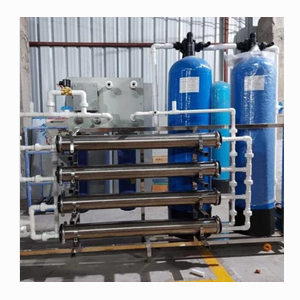


Manyug Enterprises is a leading Water Treatment Plant Manufacturers in Pune. We are trusted Suppliers, Dealers and wholesalers in Pune. Clean, safe and consistent water is essential for every industry, institution and commercial space.
Manyug Enterprises is a Pune-based manufacturer of water treatment plants. We design, build, supply and install systems that fit your raw water quality, your daily water requirement and your process needs. Our plants are built for steady output, low running cost and long service life.
We work with factories, commercial buildings, hospitals, hotels, schools and housing societies that need dependable water treatment. Every project starts with a study of your water source, your quality targets and your site conditions. We then design and build the plant to match, instead of offering a standard model that may not suit your water.Our work covers the full project: raw water analysis, process design, fabrication, supply of components, installation, commissioning and after-sales support. Having one team responsible from design to service means faster execution and clear accountability.
We manufacture a complete range of water treatment systems for industrial and commercial use. Each plant is customised for capacity, raw water quality and the required output water standard.
Industrial water treatment plants prepare water for manufacturing processes, boilers, cooling towers and utilities. A typical system combines pre-treatment such as raw water storage, pressure sand filtration and activated carbon filtration, followed by softening, RO or DM as the process requires. These plants remove suspended solids, chlorine, odour, colour, hardness and dissolved salts. They protect machinery from scaling and corrosion and keep production quality steady.
Industrial Reverse Osmosis (RO) plants use semi-permeable membranes to remove dissolved salts, heavy metals, bacteria and other contaminants. They suit applications that need low TDS water, such as food and beverage, pharmaceuticals, textiles, electronics and boiler feed. Our industrial RO plants are built with quality membranes, high-pressure pumps, anti-scalant dosing and automatic flushing. Capacities can be sized from small process lines to large continuous-duty installations.
Commercial RO plants supply safe drinking and process water to offices, schools, hospitals, hotels, restaurants and residential complexes. They are compact, simple to operate and easy to maintain. A commercial RO plant improves taste, removes harmful dissolved impurities and gives a dependable supply of treated water through the day.
Hard water contains calcium and magnesium that form scale in boilers, heat exchangers, pipes and washing equipment. A water softening plant uses ion exchange resin to replace these hardness ions with sodium. Softened water reduces scaling, lowers energy use, extends equipment life and improves soap and detergent efficiency. Our softeners come in manual and fully automatic versions with regeneration controls.
Demineralization plants remove almost all dissolved salts using cation and anion exchange resins, with an optional mixed bed unit for very high purity. DM water is used for high-pressure boilers, power generation, chemical processing, laboratories and some pharmaceutical uses. Our DM plants give low conductivity output and can be supplied with automatic regeneration and monitoring.
An Effluent Treatment Plant treats wastewater from industrial processes so it can be discharged safely or reused. Treatment typically includes screening, equalization, chemical dosing, biological treatment, clarification and filtration. A well-designed ETP helps you meet pollution control norms and reduce fresh water consumption by recycling treated water for gardening, cooling and flushing.
Water treatment plants are classified by the process they use and the water quality they deliver. The right type depends on your raw water analysis and what the treated water will be used for. Many installations combine several types into one treatment train.
Although each plant is customised, the general process follows these stages:
Specifications are finalised after raw water testing and a study of your requirements. The table below compares the main types of water treatment plants side by side.
| Technical Parameter | Pressure Sand Filtration Plant | Activated Carbon Filtration Plant | Iron Removal Plant | Water Softening Plant | Reverse Osmosis Plant | Demineralization Plant | Ultrafiltration Plant | Mixed Bed Polishing Plant | Ultraviolet / Ozone Disinfection System | Chemical Dosing System | Packaged Water Treatment Plant | Effluent Treatment Plant | Sewage Treatment Plant | Zero Liquid Discharge System |
|---|---|---|---|---|---|---|---|---|---|---|---|---|---|---|
| Category | Mechanical filtration | Adsorption | Iron removal | Hardness removal | Membrane separation | Ion exchange | Membrane filtration | Water polishing | Disinfection | Chemical treatment | Integrated treatment | Industrial wastewater | Domestic wastewater | Wastewater recovery |
| Primary purpose | Suspended solids removal | Chlorine and odour reduction | Iron and manganese reduction | Hardness reduction | Dissolved salts removal | Dissolved ions removal | Colloid and particle removal | Residual ion removal | Microbial inactivation | Chemical conditioning | Combined treatment | Industrial effluent treatment | Sewage treatment | Water recovery |
| Feed-water source | Raw or borewell water | Filtered water | Iron-bearing groundwater | Hard water | Pretreated water | RO permeate or suitable feed | Raw or pretreated water | DM or RO product water | Suitable filtered water | Application-dependent | Raw water or wastewater | Industrial effluent | Domestic sewage | Treated wastewater or concentrate |
| Typical capacity unit | LPH / m³/hr | LPH / m³/hr | LPH / m³/hr | LPH / m³/hr | LPH / m³/hr | LPH / m³/hr | LPH / m³/hr | Application-specific | LPH / m³/hr | LPH / mg/L dosing | LPH / KLD | KLD | KLD | KLD |
| Key design input | Turbidity and suspended solids | Chlorine and organic content | Iron, manganese and pH | Total hardness | TDS and feed pressure | Ionic load and conductivity | Particle loading and turbidity | Residual ionic load | UV transmittance or ozone demand | Chemical demand and pH | Feed quality and output target | Flow, BOD and COD | Flow, BOD and COD | Wastewater volume and concentration |
| Main treatment mechanism | Media filtration | Carbon adsorption | Oxidation and filtration, as required | Ion exchange | Pressure-driven membrane separation | Cation and anion exchange | Pressure-driven membrane filtration | Mixed-resin ion exchange | UV irradiation or ozone oxidation | Controlled chemical injection | Multiple treatment stages | Physical, chemical and/or biological processes | Primarily biological processes with associated treatment stages | Concentration and recovery processes |
| Primary contaminant removed | Suspended particles | Chlorine and selected organics | Dissolved iron and manganese | Calcium and magnesium | Dissolved salts and selected contaminants | Dissolved ions | Colloids and fine particles | Residual dissolved ions | Susceptible microorganisms | Depends on chemical used | Depends on configuration | Industrial pollutants | Organic matter and suspended solids | Concentrated dissolved contaminants |
| Key performance indicator | Outlet turbidity | Residual chlorine and organic reduction | Outlet iron concentration | Outlet hardness | Salt rejection and recovery | Product conductivity | Permeate turbidity and flux | Product conductivity | Validated disinfection performance | Dosing accuracy | Treated-water quality | BOD, COD, TSS and pH | BOD, COD, TSS and microbial quality | Overall water recovery |
| Measurement units | NTU, mg/L | mg/L | mg/L | mg/L as CaCO₃ | %, mg/L | µS/cm | µm, NTU | µS/cm | mJ/cm², mg/L | mg/L, L/hr | LPH, KLD | mg/L, pH | mg/L, pH | % recovery |
| Operating pressure | Design-specific | Design-specific | Design-specific | Design-specific | Membrane and feed-water dependent | Design-specific | Membrane dependent | Design-specific | System-specific | Pump-specific | Configuration-dependent | Process-dependent | Process-dependent | Process-dependent |
| Automation options | Manual / automatic | Manual / automatic | Manual / automatic | Manual / automatic | Semi-automatic / automatic | Manual / automatic | Semi-automatic / automatic | Manual / automatic | Controller-based | Timer / flow / sensor-based | Configuration-dependent | PLC / automatic options | PLC / automatic options | PLC / automatic options |
| Common equipment | Sand vessel, valves and media | Carbon vessel and activated carbon | Filter vessel and oxidation equipment | Resin vessel and brine tank | Membranes and high-pressure pump | Resin vessels and regeneration system | Membrane modules and pumps | Mixed-bed resin vessel | UV reactor or ozone generator | Dosing pump and chemical tank | Skid and integrated treatment equipment | Tanks, pumps and treatment units | Biological reactor, clarifier or membrane system | Concentration and recovery equipment |
| Pretreatment requirement | Depends on raw-water quality | Often follows initial filtration | Depends on iron chemistry | Depends on feed-water quality | Usually requires suitable pretreatment | Depends on feed ionic composition | Screening or preliminary filtration may be required | Requires suitable feed quality | Turbidity and UV transmittance affect performance | Depends on treatment objective | Depends on included stages | Screening and equalization as required | Screening and preliminary treatment | Depends on wastewater characteristics |
| Waste generation | Backwash water | Backwash water and spent carbon | Backwash water and media waste | Regeneration brine | Reject concentrate | Regeneration waste, where applicable | Backwash water or concentrate | Regeneration waste, where applicable | Usually no routine liquid waste from UV itself | Chemical containers and dosing-related waste | Depends on treatment stages | Sludge and treated effluent | Biological sludge and treated effluent | Concentrate or solids requiring management |
| Maintenance requirement | Backwashing and media inspection | Media replacement and backwashing | Media and oxidation checks | Resin regeneration and salt replenishment | Membrane cleaning and replacement | Resin regeneration and quality checks | Membrane cleaning and backwashing | Resin monitoring and replacement | Lamp, sleeve or ozone-system servicing | Pump calibration and chemical replenishment | Stage-specific maintenance | Sludge removal and process monitoring | Sludge management and process monitoring | Scale control and equipment servicing |
| Energy requirement | Pumping energy | Pumping energy | Pumping and oxidation, if used | Pumping and regeneration | Generally higher pressure demand | Pumping and regeneration | Pumping pressure | Pumping and regeneration | Electrical power or ozone generation | Dosing pump power | Configuration-dependent | Process and aeration dependent | Aeration and pumping dependent | Often energy-intensive, depending on recovery technology |
| Major applications | Industrial pretreatment | RO protection and process water | Borewell water treatment | Boilers and cooling towers | Industrial and commercial purification | Boiler feedwater and process water | RO pretreatment and clarification | High-purity process water | Water disinfection | pH control and chemical treatment | Commercial and industrial sites | Manufacturing industries | Housing societies, hotels and hospitals | Water-intensive industries |
| Final output | Lower-turbidity water | Reduced chlorine and selected organics | Reduced-iron water | Softened water | Lower-TDS permeate | Demineralized water | Clarified, membrane-filtered water | Highly polished water | Disinfected water | Chemically conditioned water | Application-specific treated water | Treated industrial wastewater | Treated sewage | Recovered water and managed concentrate |
| Typical service requirement | Media inspection and backwashing | Carbon servicing | Filter servicing | Resin regeneration | Membrane servicing | Resin servicing | Membrane servicing | Resin servicing | Disinfection equipment servicing | Dosing system calibration | Complete-system servicing | Process and sludge-system servicing | Biological process servicing | Recovery-system servicing |
Our water treatment plants serve a wide range of industrial, commercial and residential needs.
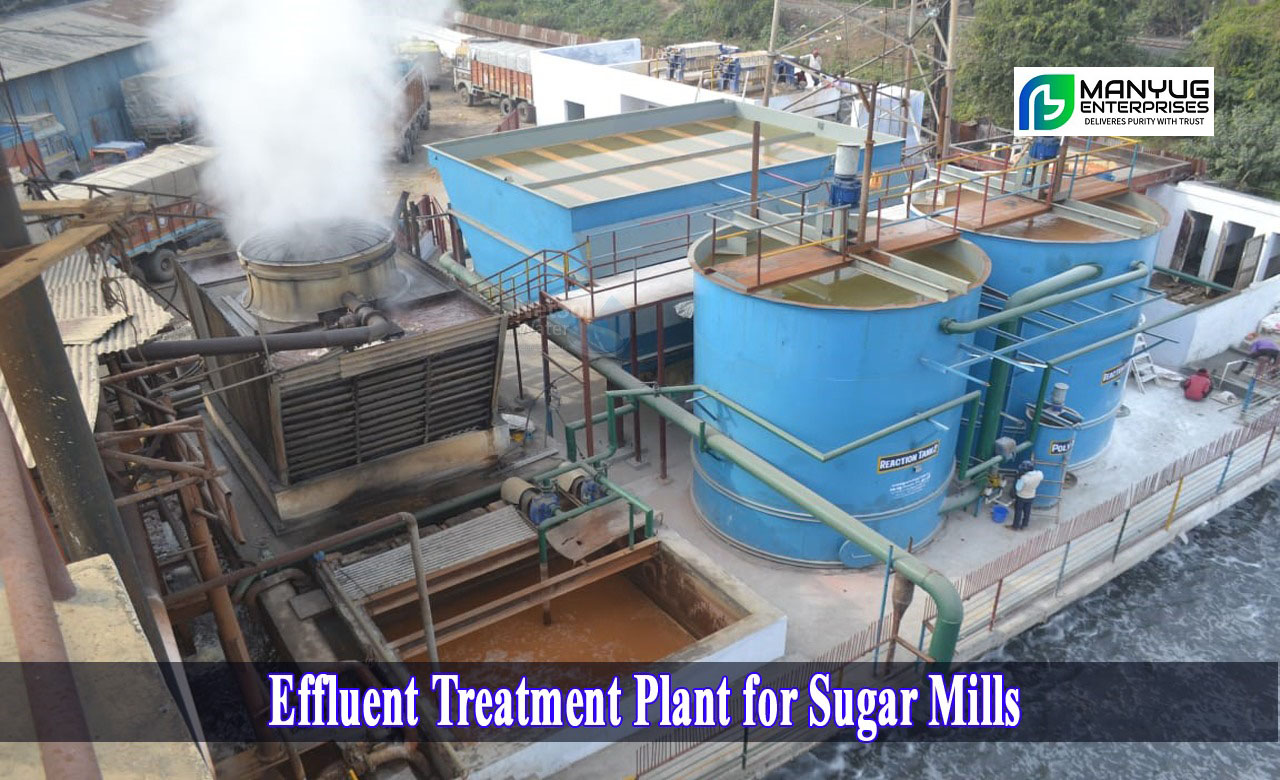
Problem: Industrial wastewater contains suspended solids, organic pollutants and potentially colour or chemicals. Inadequate treatment can result in poor effluent quality.
Solution: Analyse wastewater, equalize flow, adjust pH, apply chemical treatment where necessary, and use suitable biological treatment and filtration.
Result: Theoretically, treated effluent becomes more consistent and may meet the required discharge or reuse specification when the system is properly designed and operated.
| Before | Solution | After (expected) |
|---|---|---|
| High or fluctuating COD and suspended solids | Chemical and biological treatment as required | Reduced pollutants in treated effluent |
| Unstable treatment performance | Equalization and process monitoring | More stable treatment |
| Limited water reuse | Tertiary treatment and quality verification | Potential for suitable water reuse |
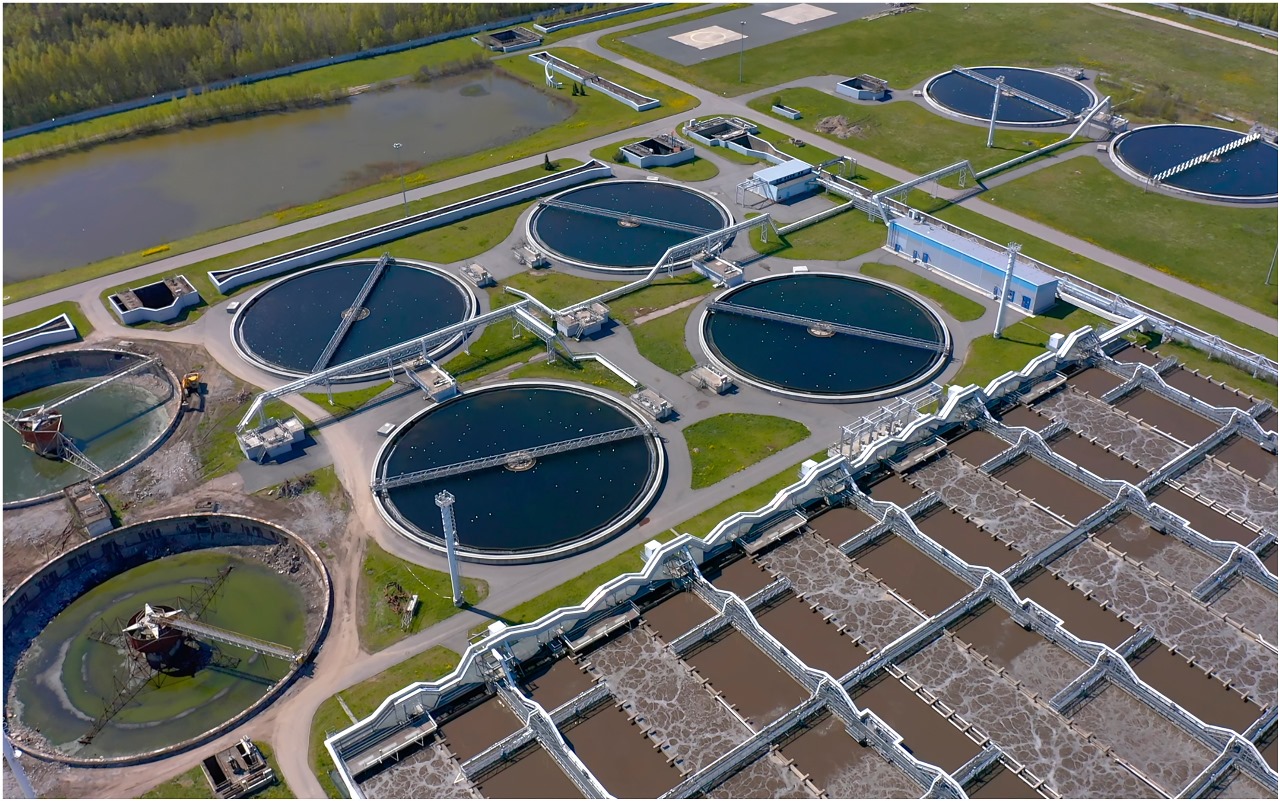
Problem: Domestic sewage from residential buildings or commercial facilities contains organic matter, suspended solids and microorganisms. Poor treatment may cause odour and unsafe discharge.
Solution: Use screening, biological treatment, clarification, filtration and disinfection as required by the intended application.
Result: Theoretically, sewage quality improves, odour can be controlled and treated water may be reused for suitable non-potable purposes.
| Before | Solution | After (expected) |
|---|---|---|
| High BOD and organic pollution | Biological treatment | Lower BOD |
| Suspended solids in treated water | Clarification and filtration | Lower suspended solids |
| Microbiological contamination risk | Appropriate disinfection | Improved microbiological quality |
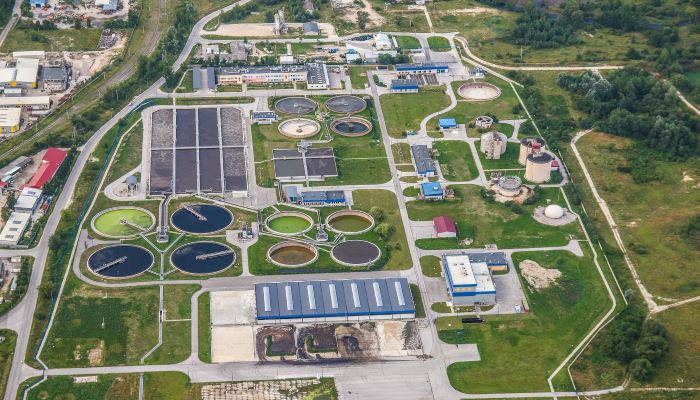
Problem: A manufacturing facility experiences variable water quality and inefficient water use. The required treatment depends on whether the source is raw water or wastewater intended for reuse.
Solution: Analyse the feedwater, identify the required output quality, and select suitable clarification, filtration, biological treatment or membrane stages for the specific application.
Result: Theoretically, the facility achieves more consistent water quality and improved control over water consumption and reuse.
| Before | Solution | After (expected) |
|---|---|---|
| High or fluctuating turbidity | Appropriate clarification and filtration | Lower turbidity |
| Uncontrolled water losses | Water balance and flow monitoring | Better water-use control |
| Limited reuse opportunities | Suitable wastewater treatment and polishing | Potentially increased water recovery |
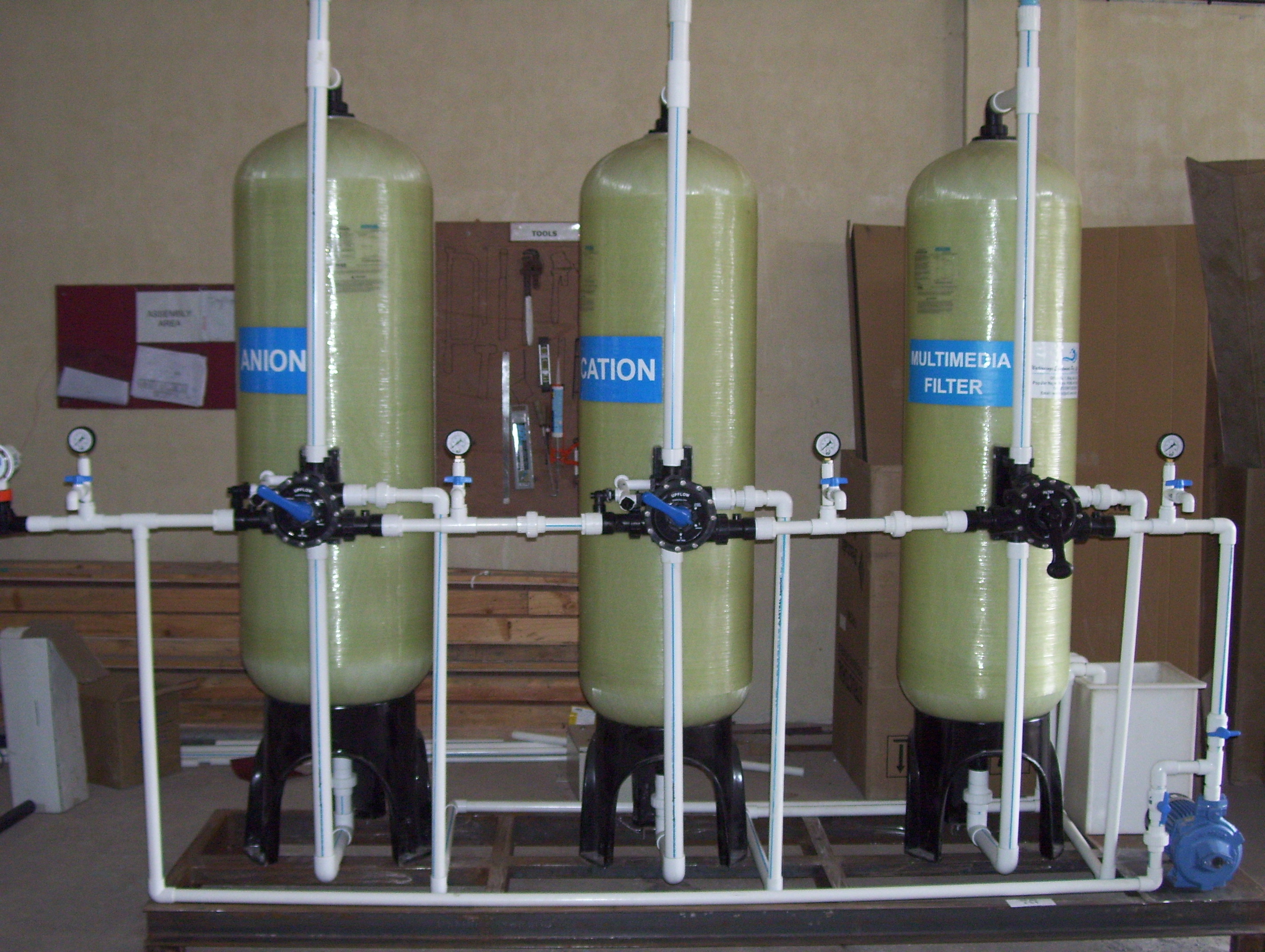
Problem: Industrial feedwater contains dissolved ions that may exceed the purity specification required for boilers or manufacturing processes.
Solution: Use cation and anion exchange, with pretreatment and mixed-bed polishing where required. Monitor conductivity and other application-specific parameters.
Result: Theoretically, dissolved-ion concentrations decrease and the treated water becomes suitable for the intended process when the complete water specification is satisfied.
| Before | Solution | After (expected) |
|---|---|---|
| High conductivity | Ion-exchange treatment | Lower conductivity |
| Excess dissolved mineral ions | Cation and anion exchange | Reduced dissolved-ion concentration |
| Risk of mineral-related deposits | Appropriate water purification and monitoring | Reduced scaling risk where relevant |
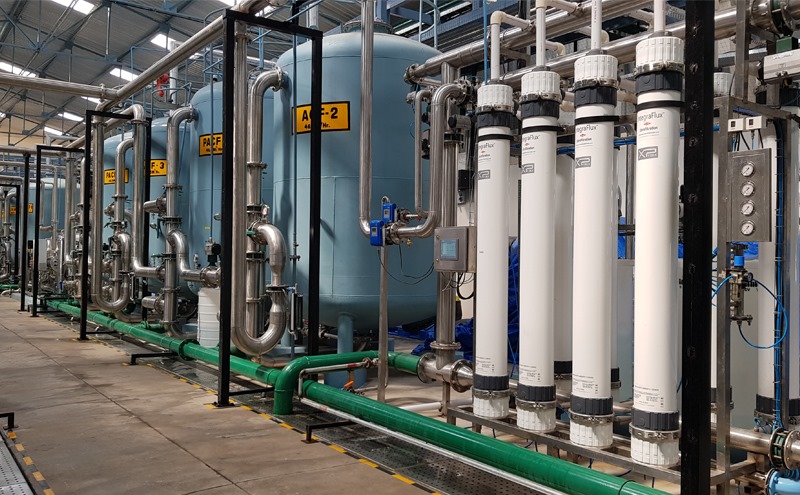
Problem: Water contains suspended particles and colloids that can affect product-water quality and foul downstream equipment, such as reverse-osmosis membranes.
Solution: Install UF membranes with suitable pretreatment, backwashing, pressure monitoring and cleaning procedures.
Result: Theoretically, suspended particles and turbidity decrease, improving the consistency of filtered water and potentially reducing downstream fouling.
| Before | Solution | After (expected) |
|---|---|---|
| High or fluctuating turbidity | UF membrane filtration | Lower turbidity |
| Suspended solids reach downstream equipment | Membrane separation | Reduced suspended-solids loading |
| Frequent downstream cleaning | UF pretreatment and routine monitoring | Potentially fewer cleaning events |
Manyug Enterprises is a leading Water Treatment Plant Manufacturers in Pune. We are trusted Suppliers, Dealers and wholesalers in Pune. Looking for a reliable water treatment plant manufacturer in Pune? Manyug Enterprises can design a system that fits your water, your budget and your timeline. Call us or send an enquiry today for a free consultation and a detailed quotation.
Water treatment plant manufacturers in Pune design and build systems such as RO plants, softeners, DM plants and effluent treatment plants for industrial and commercial use. Manyug Enterprises is one such manufacturer, offering custom plants with installation and after-sales service across Pune and nearby regions.
We offer industrial water treatment plants, industrial RO plants, commercial RO plants, water softening plants, DM plants and effluent treatment plants. We can also combine several processes into a single system when your water needs it.
Start with a water analysis report covering TDS, hardness, pH, turbidity and iron. Then define the quality you need and your daily water consumption. The right plant is the one that gets your raw water to the required standard at the lowest running cost. Our engineers can review your water report and recommend a suitable process and capacity.
Industries that use water in production, heating, cooling or cleaning need treatment. These include pharmaceuticals, food and beverage, textiles, chemicals, automobile, power, engineering and electronics. Hospitals, hotels and large commercial buildings also depend on treated water.
Contact us by phone, email or the enquiry form on our website. Share your location, water source, daily requirement and a water analysis report if you have one. Our team will review the details, suggest a suitable solution and send a quotation. A site visit can be arranged if required.